
Feature Snippet:
If you are searching for German names that mean ocean, there is an important distinction to make first: relatively few established German personal names have a direct meaning of “ocean.” The German word Meer means “sea” or “ocean,” but it does not automatically make every name containing a related Germanic or maritime element a German name. Instead, the strongest options come from three groups: names used in German that have a genuine connection to the sea, older Germanic names containing a sea related element, and names from closely related traditions that carry an unmistakable ocean association.
This guide separates those categories so you can choose a name based on its actual linguistic origin, rather than simply choosing a name because it sounds German.
Table of Contents
| Section | What You’ll Learn |
| German Names With Ocean Connections | The strongest German used options |
| Germanic Names Connected to the Sea | Older Germanic and Norse choices |
| Names With Direct Sea Meanings | Names whose meanings directly involve the sea |
| Female Ocean Inspired Names | Feminine choices with maritime associations |
| Male Ocean Inspired Names | Masculine choices connected with the sea |
| German Names Related to Water | Broader water and maritime options |
| How to Choose a Name | Practical factors for selecting one |
| Ocean Name Comparison | Meaning, origin, and connection at a glance |
| FAQs | Answers to common questions |
German Names With Ocean Connections
The first thing to understand is that “German” can describe modern usage, while “Germanic” describes a much broader linguistic family. A name can therefore appear in German speaking countries without originating from German.
For example, Doris has German usage, but its origin is Ancient Greek rather than German. In Greek mythology, Doris was a sea nymph and daughter of Oceanus and Tethys. Her actual name meaning, however, relates to the Dorian people rather than literally meaning “ocean.”
Likewise, Marina is an international name associated with the sea through Latin marinus, “of the sea,” but it is not a name of specifically German origin.
| Name | Origin/Usage | Ocean Connection | Direct Meaning? |
| Doris | Ancient Greek; German usage | Sea nymph in mythology | No |
| Marina | Latin; international, including German usage | “Of the sea” | Yes, sea related |
| Maren | Scandinavian/German usage | Maritime association through its broader naming history | Not directly “ocean” |
| Ægir | Old Norse, Germanic | God/giant of the sea | Yes |
| Njord | Old Norse, Germanic | God associated with sea, sailing, and fishing | No, deity association |
| Ásmarr | Old Norse/Germanic | Contains marr, “sea/ocean” | Partly |
| Thalassa | Ancient Greek | Personification of the sea | Yes |
The table shows why careful wording matters: not every ocean associated name literally translates as “ocean.”
Germanic Names Connected to the Sea

If you are willing to expand German names to include the older Germanic linguistic tradition, you have several stronger choices.
Ægir
Ægir is an Old Norse name meaning “sea, ocean.” In Norse mythology, Ægir was a god or giant associated with the ocean. Behind the Name also lists Ægir among names of Proto Germanic origin, although its actual historical usage is specifically Old Norse.
This makes Ægir one of the clearest choices if your priority is an established historical name with a direct ocean meaning.
Ásmarr
Ásmarr is an Old Norse name formed from áss, “god,” and marr, “sea, ocean, lake.” It therefore has a direct maritime element, although it is Old Norse rather than modern German.
The name may appeal to someone who wants an older Germanic feel while retaining a strong connection to the sea.
Njord
Njord comes from Old Norse Njǫrðr and ultimately from Proto Germanic Nerþuz. In Norse mythology, Njord was associated with the sea, sailing, fishing, and fertility.
Unlike Ægir, Njord does not literally mean “ocean.” Its connection comes primarily from mythology and the deity’s maritime role.
Names With Direct Sea Meanings
If your main goal is the meaning rather than strict German origin, several names offer a much clearer connection to the sea.
| Name | Meaning | Origin | Type of Connection |
| Ægir | Sea, ocean | Old Norse | Direct meaning |
| Marina | Of the sea | Latin | Direct linguistic meaning |
| Ocean | Ocean | English | Direct word name |
| Thalassa | Sea | Greek | Direct meaning |
| Derya | Sea, ocean | Turkish/Persian | Direct meaning |
| Darya | Sea, ocean | Persian | Direct meaning |
| Deniz | Sea | Turkish | Direct meaning |
| Moana | Ocean/sea association | Polynesian usage | Sea related |
However, only some of these should be called German names. For example, Behind the Name identifies Darya as Persian and Derya as Turkish, while Deniz is Turkish.
So, if you are naming a child specifically because you want a German origin name, do not simply place these names in a German category.
Female Ocean Inspired Names
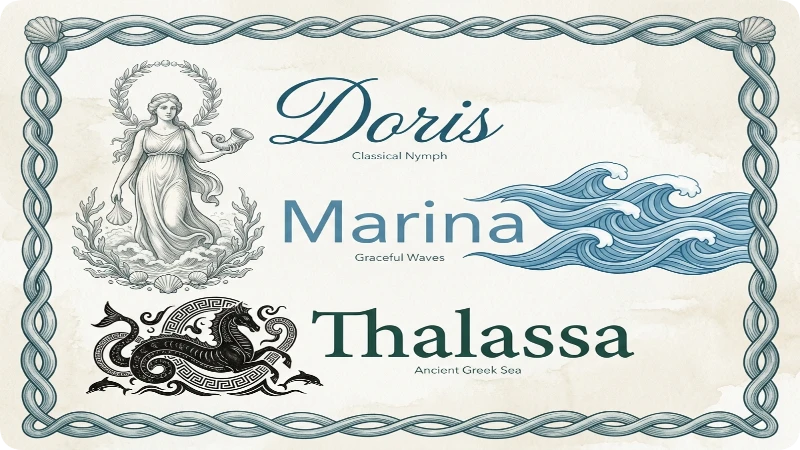
Finding a feminine name that is both genuinely German in origin and directly means “ocean” is difficult. Therefore, it helps to distinguish German usage from German origin.
Doris
Doris is used in German as well as several other languages, but its origin is Ancient Greek. In mythology, Doris was a sea nymph associated with Oceanus and Tethys. Her name itself means “Dorian woman,” so the ocean connection is mythological rather than etymological.
Marina
Marina provides a much more direct sea meaning. It comes from Latin marinus, meaning “of the sea.” It is an international feminine name and should therefore be described as a name used in German speaking contexts rather than a distinctly German origin name.
Thalassa
Thalassa is Ancient Greek for “sea.” In Greek mythology, Thalassa personified the sea. It is not German, but it offers one of the clearest feminine ocean meanings if linguistic origin is less important than symbolism.
| Feminine Name | Meaning/Association | German Origin? | Ocean Link |
| Doris | Dorian woman; sea nymph | No | Mythological |
| Marina | Of the sea | No | Direct |
| Thalassa | Sea | No | Direct |
| Maren | Maritime association | No | Indirect |
| Ocean | Ocean | No | Direct |
Male Ocean Inspired Names
The Germanic tradition gives you stronger masculine options because Old Norse mythology contains several important maritime figures.
Ægir
Ægir is the strongest match when you want a masculine name that actually means “sea, ocean.” It comes from Old Norse and belongs to the broader Germanic naming tradition.
Njord
Njord offers a different type of ocean connection. Rather than literally translating as “ocean,” the name connects to the Norse god associated with the sea, sailing, and fishing.
Ásmarr
Ásmarr is especially interesting because its second element, marr, means “sea, ocean, lake.” The complete name combines that element with áss, “god.”
| Name | Historical Origin | Meaning/Association | Ocean Strength |
| Ægir | Old Norse | Sea, ocean | Very strong |
| Ásmarr | Old Norse | God + sea/ocean/lake | Strong |
| Njord | Old Norse | Sea and sailing deity | Strong association |
| Ocean | Modern English | Ocean | Very strong |
| Okeanos | Ancient Greek | Ocean | Very strong |
German Names Related to Water
If you do not need the name to mean ocean literally, you can broaden your search to names connected with water, maritime life, waves, or the sea.
This approach gives you more flexibility while still preserving the ocean inspired theme.
For example, Doris has a strong sea association through Greek mythology, while Njord represents the sea through Norse mythology. Marina provides a direct linguistic connection because its Latin root means “of the sea.”
Why Germanic History Matters
The German language itself preserves an old Germanic maritime vocabulary. The German word Meer, meaning “sea” or “ocean,” traces back through Middle High German and Old High German forms to an older Germanic word associated with the sea. Related forms occur across several Germanic languages.
That history explains why sea related elements can appear in older Germanic naming traditions even when a particular name is not a modern German given name.
Best Germanic Ocean Names at a Glance
| Name | Gender | Origin | Meaning | Best For |
| Ægir | Masculine | Old Norse | Sea, ocean | Direct ocean meaning |
| Ásmarr | Masculine | Old Norse | God + sea/ocean/lake | Ancient Germanic feel |
| Njord | Masculine | Old Norse | Sea and sailing deity | Mythological meaning |
| Doris | Feminine | Ancient Greek; German usage | Dorian woman | Sea mythology |
| Marina | Feminine | Latin; international | Of the sea | Elegant ocean meaning |
| Thalassa | Feminine | Ancient Greek | Sea | Direct sea meaning |
Germanic Sea Elements to Know
Understanding the original word elements can help you evaluate names more accurately.
| Element | Historical Language | Meaning | Example |
| marr | Old Norse | Sea, ocean, lake | Ásmarr |
| mari | Germanic/related historical forms | Sea | Related to German Meer |
| haf | Old Norse | Sea, ocean | Found in Norse names |
| sjór | Old Norse | Sea | Maritime vocabulary |
| Meer | German | Sea, ocean | Modern German word |
Not every element in this table should be treated as a modern German naming element. Instead, these forms help explain the broader linguistic relationship between German and other Germanic languages. The historical German word Meer is especially well documented as a word for the sea or ocean.
How to Choose a German Ocean Inspired Name

When choosing among German, Germanic, and sea inspired names, start by deciding which quality matters most.
Choose by Meaning
If you want the name to literally mean ocean or sea, Ægir is one of the strongest Germanic choices. Marina and Thalassa also have direct sea meanings, but they come from Latin and Greek rather than Germanic languages.
Choose by Cultural Origin
If historical Germanic heritage matters, consider names such as Ægir, Ásmarr, or Njord, while recognizing their Old Norse background.
Choose by Sound
Names such as Marina feel familiar and flowing, while Ægir and Njord have a much stronger ancient Nordic character.
Consider Pronunciation
Historical names can create pronunciation questions, especially when they contain letters or sounds that do not occur commonly in modern English or German. If you choose a name such as Ægir, consider whether you are comfortable explaining its pronunciation.
Check the Exact Meaning
This step matters most. A name can be associated with the ocean without literally meaning “ocean.” Njord, for example, has a powerful maritime association but should not be presented as a direct translation of “ocean.”
Are There Many German Names That Literally Mean Ocean?
Not really. This is an important finding for anyone researching this keyword.
The established name sources do not provide a large collection of traditional German given names that literally translate to “ocean.” Instead, the strongest direct matches tend to come from Old Norse, Greek, Latin, or other languages.
Therefore, a high quality list should not invent dozens of “German ocean names” simply to make the article longer.
A more accurate approach is to identify the few strong Germanic options and then clearly separate them from international names used in German speaking cultures.
German vs. Germanic vs. Ocean Inspired Names
| Category | Example | What It Means |
| German language | Meer | Sea/ocean |
| Germanic tradition | Ægir | Sea/ocean |
| Old Norse | Njord | Sea deity association |
| German usage | Doris | Sea nymph association |
| Latin | Marina | Of the sea |
| Greek | Thalassa | Sea |
| English | Ocean | Ocean |
This distinction helps you avoid a common naming mistake: treating German usage, German origin, Germanic origin, and ocean association as if they were the same thing.
Frequently Asked Questions About German Names That Mean Ocean
What German name means ocean?
There are very few established traditional German given names that literally mean “ocean.” The German word Meer means “sea” or “ocean,” while the Old Norse name Ægir, from the broader Germanic tradition, directly means “sea, ocean.”
Is Ægir a German name?
Ægir is better described as an Old Norse name rather than a modern German name. However, Old Norse belongs to the broader Germanic linguistic family, making Ægir relevant when researching Germanic names connected with the ocean.
What Germanic name means sea or ocean?
Ægir is one of the clearest examples because its Old Norse meaning is directly given as “sea, ocean.” Ásmarr also contains the Old Norse element marr, meaning “sea, ocean, lake.”
Is Marina a German name meaning ocean?
Marina is not German in origin. It comes from Latin and means “of the sea.” It can be used internationally, including in German speaking settings, but calling it a German origin name would be inaccurate.
Is Njord a name that means ocean?
Njord does not literally translate as “ocean.” Instead, Njord is the name of a Norse god associated with the sea, sailing, fishing, and fertility.
What female name means sea?
Thalassa directly means “sea” in Greek, while Marina means “of the sea” through its Latin origin. Doris also has a strong maritime connection because Greek mythology identifies Doris as a sea nymph, although her actual name meaning is “Dorian woman.”
What is the German word for ocean?
The German word Meer means “sea” or “ocean.” Its history reaches back through Middle High German and Old High German forms to an older Germanic word.
Are there German girl names associated with the sea?
Yes, but most strong examples are not specifically German in origin. Doris has German usage and a sea related mythological association, while Marina has a direct Latin connection meaning “of the sea.”
What is the best Germanic name for an ocean theme?
If you want a direct meaning, Ægir is the strongest choice because it literally means “sea, ocean” in Old Norse. If you prefer a maritime mythological association, Njord is another strong option.
Can I use a Germanic name even if it is not German?
Yes. Germanic is a much broader linguistic category than modern German. Old Norse, Old English, and other historical languages belong to the Germanic family. However, an article or naming guide should identify the specific language and historical tradition rather than simply labeling every Germanic name “German.”
Key Takeaways
- Traditional German names that literally mean “ocean” are uncommon.
- Ægir is one of the strongest Germanic choices because it directly means “sea, ocean.”
- Ásmarr contains the Old Norse element marr, meaning “sea, ocean, lake.”
- Njord has a powerful sea connection through Norse mythology rather than a literal “ocean” translation.
- Marina means “of the sea,” but its origin is Latin rather than German.
- Thalassa literally means “sea” in Greek, not German.
- Doris has German usage and a strong maritime mythological association, but its name meaning is not “ocean.”
- The German word Meer means “sea” or “ocean.”
- Always distinguish German, Germanic, and German used names when researching name origins.
Conclusion
Finding German names that mean ocean requires a little more linguistic precision than simply collecting names with watery associations. Modern German has the word Meer for “sea” or “ocean,” but established personal names with that exact meaning are limited.
If you want a genuinely Germanic name with a direct ocean meaning, Ægir stands out. For a broader maritime theme, Ásmarr and Njord offer historical Norse connections, while Marina and Thalassa provide direct sea meanings from Latin and Greek.
Ultimately, the best choice depends on whether you value German usage, Germanic heritage, a literal ocean meaning, or a mythological connection to the sea. Keeping those distinctions clear will help you choose a name that is not only beautiful but linguistically accurate.

Leave a Reply