
Introduction
Japanese names often connect beautifully with nature, and flowers provide some of the most graceful naming choices. From Hana, which can directly mean “flower,” to Sakura, meaning “cherry blossom,” these names combine natural beauty with distinctive Japanese sounds.
However, Japanese name meanings depend heavily on the kanji characters used to write them. The same pronunciation can therefore have several possible meanings. For example, Ren can represent 蓮, meaning “lotus,” while other kanji can give the same name a completely different meaning.
Whether you want a traditional floral name, a delicate modern choice, or a Japanese name inspired by a specific flower, this list can help you find a meaningful option.
Table of Contents
| Section | What You’ll Learn |
| Japanese Flower Names | What makes these names special |
| Best Flower Names | Beautiful choices and their meanings |
| Girl Names | Feminine Japanese floral names |
| Boy & Unisex Names | Floral choices beyond traditional girl names |
| Names by Flower | Cherry blossom, lotus, iris, violet, and more |
| Choosing a Name | How to select the right floral name |
| FAQs | Answers to common naming questions |
What Makes Japanese Flower Names Special?
Japanese floral names can draw directly from flower names, flower related kanji, or combinations that include characters such as 花 (hana/ka), meaning “flower,” or 華 (hana/ka), which can convey ideas such as flower, splendor, or magnificence.
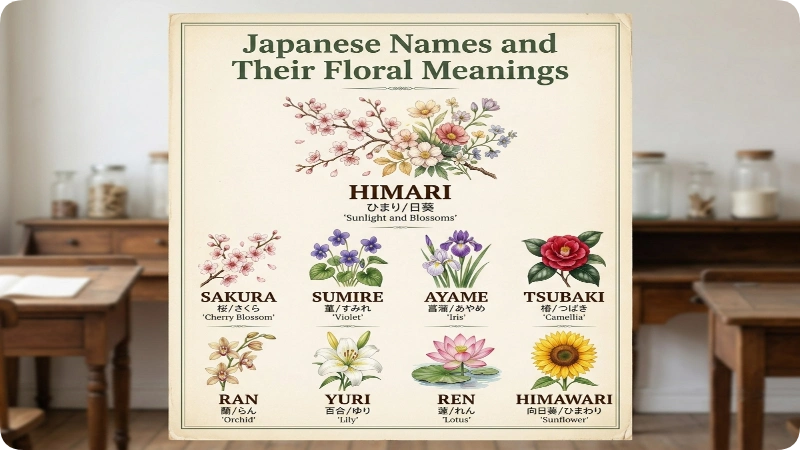
Moreover, some names refer to particular flowers rather than flowers in general. Ayame, for example, means “iris,” while Sumire means “violet” and Tsubaki means “camellia.”
This variety gives parents plenty of options, whether they prefer a name with a direct floral meaning or one with a more subtle botanical connection.
Beautiful Japanese Names That Mean Flower
Here are some of the strongest choices if you specifically want a Japanese name connected with flowers or blossoms.
| Name | Japanese | Meaning | Gender |
| Hana | 花, 華 | Flower | Girl |
| Ayaka | 彩花, 彩華 | Color + flower | Girl |
| Ayame | 菖蒲 | Iris | Girl |
| Sumire | 菫 | Violet | Girl |
| Tsubaki | 椿 | Camellia | Girl |
| Sakura | 桜 | Cherry blossom | Girl |
| Himari | 陽葵 | Sunflower related name | Girl |
| Ren | 蓮 | Lotus | Unisex |
| Ran | 蘭 | Orchid | Girl |
| Yuri | 百合 | Lily | Girl |
These meanings come from established Japanese name references, although different kanji can create different meanings for the same pronunciation.
Japanese Girl Names Meaning Flower

Hana
Hana (花, 華) is one of the clearest Japanese names meaning “flower.” The kanji 花 and 華 can both be read hana, although they carry somewhat different nuances.
Hana feels simple, graceful, and unmistakably floral. Because of its short spelling and direct meaning, it works especially well for parents who want an uncomplicated nature inspired name.
Sakura
Sakura (桜) means “cherry blossom.” The cherry blossom holds a particularly recognizable place in Japanese culture, making Sakura one of the most distinctive floral names associated with Japan.
The name has a soft, elegant sound while maintaining a strong connection to Japanese nature.
Ayame
Ayame (菖蒲) means “iris.” It offers a more specific floral meaning than Hana or Sakura, making it a lovely choice for someone who wants a less obvious flower name.
Sumire
Sumire (菫) means “violet.” The name has a delicate, gentle quality and directly refers to the flower.
Tsubaki
Tsubaki (椿) means “camellia.” This name provides a strong botanical connection while still sounding distinctly Japanese.
Ran
Ran (蘭) means “orchid.” Its short, elegant sound makes it an appealing option for parents looking for a floral name that feels distinctive.
Yuri
Yuri (百合) means “lily.” The name has a soft sound and a direct connection to one of the world’s best known flowers.
Himari
Himari comes from a shortening of Japanese himawari, meaning “sunflower.” The name uses kanji associated with sunlight and hollyhock, although other kanji combinations can also produce the same reading.
Ayaka
Ayaka (彩花, 彩華) can combine 彩, meaning “colour,” with 花 or 華, meaning “flower.” This gives Ayaka a colorful and floral interpretation.
Hanae
Hanae (花絵, 華恵, 華絵) can combine flower related kanji with characters meaning “picture” or “favour/benefit,” depending on the spelling.
Hanako
Hanako (花子) combines 花, meaning “flower,” with 子, meaning “child.” As a result, the name has a direct and traditional floral structure.
More Beautiful Floral Names for Girls
| Name | Flower Connection | Overall Feel |
| Hana | Flower | Simple and classic |
| Sakura | Cherry blossom | Elegant and iconic |
| Ayame | Iris | Refined and distinctive |
| Sumire | Violet | Delicate and gentle |
| Tsubaki | Camellia | Sophisticated and botanical |
| Ran | Orchid | Short and elegant |
| Yuri | Lily | Soft and graceful |
| Himari | Sunflower | Bright and cheerful |
| Ayaka | Flower | Colorful and feminine |
| Hanae | Flower | Traditional and graceful |
Japanese Names Connected With Specific Flowers
If you have a particular flower in mind, choosing a name connected directly with that flower can make the meaning more personal.
| Flower | Japanese Name | Meaning |
| Cherry blossom | Sakura | Cherry blossom |
| Iris | Ayame | Iris |
| Violet | Sumire | Violet |
| Camellia | Tsubaki | Camellia |
| Orchid | Ran | Orchid |
| Lily | Yuri | Lily |
| Sunflower | Himari | Derived from himawari, sunflower |
| Lotus | Ren | Lotus |
| White jasmine | Airi | Includes kanji meaning white jasmine |
| Japanese apricot/plum | Ume | Japanese apricot, plum |
The flower associations above come from Japanese name references; notably, Airi can use 莉, associated with white jasmine, while Ume refers specifically to the Japanese apricot/plum.
Japanese Names Meaning Blossom or Flower
Not every floral name needs to identify a particular flower. Some names use Japanese characters associated with flowers or blossoms.
Fūka, for example, can use 風花, combining 風, meaning “wind,” with 花, meaning “flower” or “blossom.”
Yūka can use 優花, combining 優, associated with excellence, gentleness, or superiority, with 花, meaning “flower” or “blossom.”
Chika can also use 千花 or 智花, where 花 contributes the meaning “flower.” However, Chika has several possible kanji combinations, so its exact meaning depends on the chosen spelling.
Japanese Floral Names for Boys and Gender Neutral Choices

Japanese flower names often appear more frequently among feminine names, but some floral choices work beyond that category.
Ren
Ren (蓮) means “lotus” and is listed as both masculine and feminine in Japanese usage. The same pronunciation can also use 恋, meaning romantic love, or other kanji.
Because the lotus has a strong botanical identity, Ren works particularly well for someone seeking a short, modern name with a floral meaning.
Hinata
Hinata can be written in several ways. One less standard reading connects it with 向日葵 (himawari), meaning “sunflower,” although Hinata more commonly has meanings such as “sunny place” or “toward the sun.”
Therefore, it is better to describe Hinata as sunflower associated in a specific writing, rather than simply saying that Hinata means “sunflower.”
Haruka
Haruka can use 春花, combining 春, meaning “spring,” with 花, meaning “flower.” However, Haruka also has other kanji combinations and meanings.
This makes it a good example of why Japanese names require attention to the exact kanji.
Short Japanese Flower Names
Short names can create a particularly clean and memorable style.
| Name | Meaning | Style |
| Hana | Flower | Simple |
| Ren | Lotus | Modern |
| Ran | Orchid | Elegant |
| Ume | Japanese apricot/plum | Traditional |
| Yuri | Lily | Soft |
| Aoi | Hollyhock | Nature inspired |
| Sakura | Cherry blossom | Iconic |
| Ayame | Iris | Refined |
Aoi can use 葵, which means “hollyhock, althea.” It can also have other meanings with different kanji, so the botanical meaning specifically comes from the 葵 spelling.
Japanese Flower Names by Style
Different floral names create different impressions. If you want a name that feels traditional, modern, delicate, or distinctive, the following grouping can help.
| Style | Names to Consider |
| Simple | Hana, Ren, Ran |
| Elegant | Sakura, Tsubaki, Yuri |
| Delicate | Sumire, Hanae, Ayame |
| Nature inspired | Aoi, Himari, Ume |
| Distinctive | Tsubaki, Ran, Ayame |
| Modern | Ren, Himari, Sakura |
These style descriptions reflect naming impressions rather than fixed linguistic meanings.
How to Choose the Right Japanese Flower Name
Start With the Flower Meaning
First, decide whether you want a general flower meaning or a particular flower. Hana works well for a broad floral meaning, while Sakura, Sumire, and Tsubaki connect directly to specific flowers.
Check the Kanji
Next, check the exact kanji. Japanese names can have multiple spellings, and the meaning can change when you change the characters.
Consider Pronunciation
Then, say the name aloud with the surname. Short names such as Hana, Ren, and Ran can sound especially crisp, while longer choices such as Himari or Hanako create a different rhythm.
Think About Cultural Context
Finally, remember that a Japanese name carries linguistic and cultural context beyond its English translation. If you plan to use one as a given name, verify the preferred kanji and its natural Japanese usage.
Frequently Asked Questions
What Japanese name means flower?
Hana (花 or 華) directly means “flower” in Japanese. It is one of the clearest Japanese given names with a floral meaning.
What Japanese girl name means flower?
Hana is the most direct choice. Other Japanese girl names with flower related meanings include Ayaka, Ayame, Sumire, Tsubaki, Sakura, Ran, Yuri, and Himari.
What Japanese name means cherry blossom?
Sakura (桜) means “cherry blossom.” It is a feminine Japanese given name with a strong connection to Japanese botanical imagery.
What Japanese name means lotus?
Ren (蓮) means “lotus.” Ren can be used for both masculine and feminine Japanese naming, although other kanji can give the same pronunciation different meanings.
What Japanese name means violet?
Sumire (菫) means “violet.” The name directly comes from the Japanese word for the flower.
What Japanese name means iris?
Ayame (菖蒲) means “iris.” It provides a direct botanical meaning rather than simply using a flower related character.
What Japanese name means orchid?
Ran (蘭) means “orchid.” Its short form makes it an appealing choice for parents who want an elegant floral name.
What Japanese name means lily?
Yuri (百合) means “lily.” Yuriko (百合子) combines Yuri, meaning “lily,” with 子, meaning “child.”
What Japanese name means sunflower?
Himari comes from a shortening of himawari, the Japanese word for “sunflower.” Hinata can also have a less standard spelling connected with himawari, although its more common meanings relate to sunlight or a sunny place.
Does every Japanese name have only one meaning?
No. Japanese names can use different kanji combinations with the same pronunciation. Therefore, the exact meaning depends on the characters chosen. For example, Ren can mean “lotus” when written 蓮, but another spelling can give it a different meaning.
Key Takeaways
- Hana directly means “flower” and offers one of the simplest floral choices.
- Sakura means “cherry blossom.”
- Sumire means “violet.”
- Ayame means “iris.”
- Tsubaki means “camellia.”
- Ran means “orchid.”
- Yuri means “lily.”
- Ren means “lotus” when written 蓮.
- Himari connects to the Japanese word for “sunflower.”
- Japanese name meanings can change depending on the kanji, so always check the exact spelling.
Conclusion
Japanese flower names offer a beautiful combination of nature, language, and symbolism. Whether you prefer the simplicity of Hana, the elegance of Sakura, the delicacy of Sumire, or the distinctive sound of Tsubaki, you can find many floral options with genuine Japanese connections.Most importantly, check the kanji before choosing a name. A pronunciation can have multiple written forms, and each form may carry a different meaning. By considering the flower, meaning, pronunciation, and cultural context together, you can choose a Japanese floral name that feels both beautiful and appropriate.

Leave a Reply