Feature Snippet:
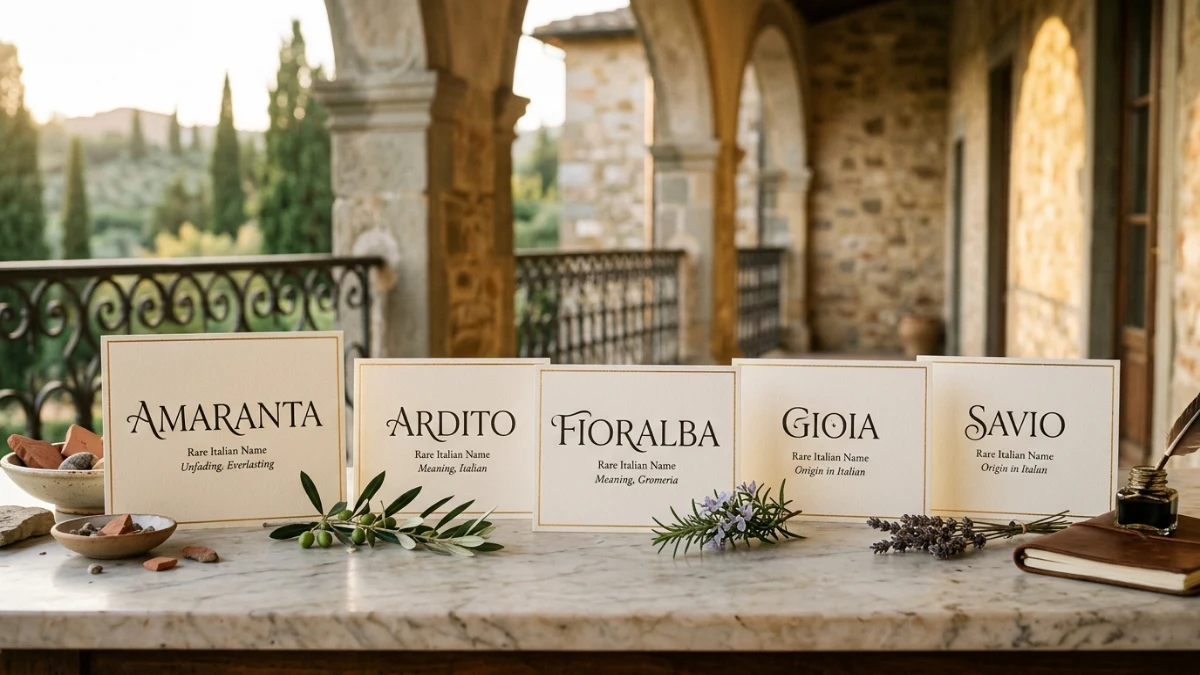
Rare Italian names can offer an appealing combination of history, elegance, meaning, and distinctive sound. While names such as Sofia, Giulia, Leonardo, and Luca are widely recognized, Italy also has a rich collection of less familiar names that deserve attention. Some rare Italian names come from medieval naming traditions, while others developed from Latin, Greek, Germanic, or religious sources. For example, Adone is the Italian form of Adonis, Amaranta is the Italian form of Amarantha, and Ardito comes from medieval Italian ardito, meaning “bold.”
Other choices stand out because they come directly from Italian vocabulary. Fiamma means “flame,” Gioia means “joy,” Sole means “sun,” and Selvaggia means “wild.”
Because rarity depends on country, generation, and region, the names in this guide should not all be considered universally rare. Instead, they are names documented as rare, unusual, historical, regional, or less familiar within Italian naming contexts.
Table of Contents
| Section | What You’ll Learn |
| Rare Italian Girl Names | Distinctive feminine names with meanings |
| Rare Italian Boy Names | Uncommon masculine Italian choices |
| Rare Italian Unisex Names | Names with masculine and feminine usage |
| Italian Names With Beautiful Meanings | Names connected with nature, love, joy, and strength |
| Old and Medieval Italian Names | Historical names with distinctive character |
| Rare Italian Names Inspired by Nature | Floral, celestial, and nature related choices |
| Rare Italian Religious Names | Traditional names with religious connections |
| Rare Italian Names by Style | Names organized by personality and aesthetic |
| How to Choose a Rare Italian Name | Practical naming considerations |
| FAQs | Answers to common questions |
Rare Italian Girl Names

Italian naming traditions include many feminine names that sound elegant without feeling overly familiar internationally.
| Name | Meaning or Origin | Style |
| Amaranta | Italian form of Amarantha | Romantic |
| Ambra | Italian form of Amber | Modern |
| Arcangela | Feminine form of Arcangelo | Spiritual |
| Crocetta | Diminutive of Crocifissa | Traditional |
| Fioralba | Flower + dawn | Poetic |
| Fiamma | Flame | Strong |
| Gioia | Joy | Bright |
| Loredana | Possibly from Loredan/Loreo | Elegant |
| Lorita | Possibly variant of Loreto | Rare |
| Novella | New, young, novel | Literary |
| Ornella | Flowering ash tree | Nature inspired |
| Rossa | Red | Bold |
| Santuzza | Diminutive of Santa | Traditional |
| Selvaggia | Wild | Dramatic |
| Sole | Sun | Minimalist |
Amaranta
Amaranta is the Italian form of Amarantha and is specifically listed as rare in Italian usage. Its connection with the amaranth name family gives it a botanical and literary quality.
Fioralba
Fioralba combines the Italian elements fiore, meaning “flower,” and alba, meaning “dawn.” It creates a particularly poetic image of a flower at dawn. Behind the Name lists it as rare Italian usage.
Fiamma
Fiamma directly means “flame” in Italian. Its short form and vivid meaning give it a strong, expressive character.
Gioia
Gioia means “joy” in Italian. Although recognizable, it remains a distinctive choice compared with many internationally common Italian names.
Selvaggia
Selvaggia means “wild” in Italian. It has a dramatic, nature inspired quality and is specifically listed as rare Italian usage.
Rare Italian Boy Names
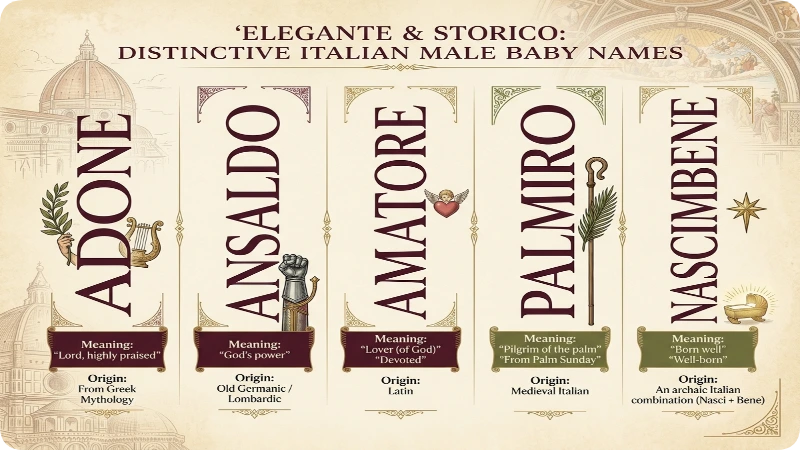
Less familiar Italian boy names often have medieval, Latin, Germanic, or religious roots.
| Name | Meaning or Origin | Style |
| Adone | Italian form of Adonis | Mythological |
| Adelardo | Italian form of Adalhard | Medieval |
| Agapito | Beloved | Traditional |
| Ambrogino | Diminutive of Ambrogio | Vintage |
| Ansaldo | God + power | Strong |
| Amatore | Italian form of Amator | Romantic |
| Ardito | Bold | Strong |
| Arcangelo | Archangel | Religious |
| Bonaccorso | Good + help | Medieval |
| Bonizzone | Derived from “good” | Medieval |
| Nascimbene | Born well | Historical |
| Napoleone | Italian form of Napoleon | Historic |
| Palmiro | Pilgrim | Religious |
| Savio | Wise | Virtue based |
| Sante | Variant of Santo | Traditional |
Adone
Adone is the Italian form of Adonis and is listed as rare in Italian usage. The name connects with the figure of Adonis from Greek mythology.
Ansaldo
Ansaldo is a rare Italian name derived from a Germanic name combining elements meaning “god” and “power” or “authority.”
Ardito
Ardito comes from medieval Italian ardito, meaning “bold.” It offers a particularly direct virtue based meaning.
Palmiro
Palmiro means “pilgrim” in Italian. Historically, it referred to someone who had made a pilgrimage to Palestine and connects to the tradition of pilgrims bringing palm fronds home.
Savio
Savio means “wise” in Italian. Its concise sound makes it an interesting alternative to longer traditional Italian names.
Rare Italian Unisex Names
Italian has fewer clearly documented rare unisex names than feminine or masculine choices, but several names have established usage across genders.
| Name | Gender Usage | Meaning |
| Amore | Masculine & feminine | Love |
| Evangelista | Masculine & feminine | Evangelist, preacher |
| Fiore | Masculine & feminine | Flower |
| Loreto | Masculine & feminine | Laurel grove |
| Rosario | Masculine & feminine | Rosary |
| Armani | Masculine & feminine in modern English usage | Italian surname origin |
Amore is the Italian form of Amor and is listed as rare Italian usage for both males and females.
Fiore means “flower” in Italian and can be used for both males and females. It can also be understood as an Italian form of the Latin names Flora and Florus.
Loreto has both masculine and feminine usage across Spanish and Italian contexts. In Italy, it is mostly masculine and derives from the Italian town of Loreto, whose Latin name Lauretum means “laurel grove.”
Rosario is another cross gender choice, although its gender pattern differs by language: it is feminine in Spanish but masculine in Italian.
Italian Names With Beautiful Meanings
Some rare or less familiar Italian names stand out because their meanings are especially evocative.
| Name | Meaning | Theme |
| Amore | Love | Romantic |
| Diletta | Beloved | Romantic |
| Fiamma | Flame | Passion |
| Fiore | Flower | Nature |
| Fioralba | Flower + dawn | Nature |
| Gioia | Joy | Happiness |
| Sole | Sun | Celestial |
| Savio | Wise | Virtue |
| Ardito | Bold | Strength |
| Selvaggia | Wild | Nature |
| Rossa | Red | Color |
| Perla | Pearl | Precious |
Diletta
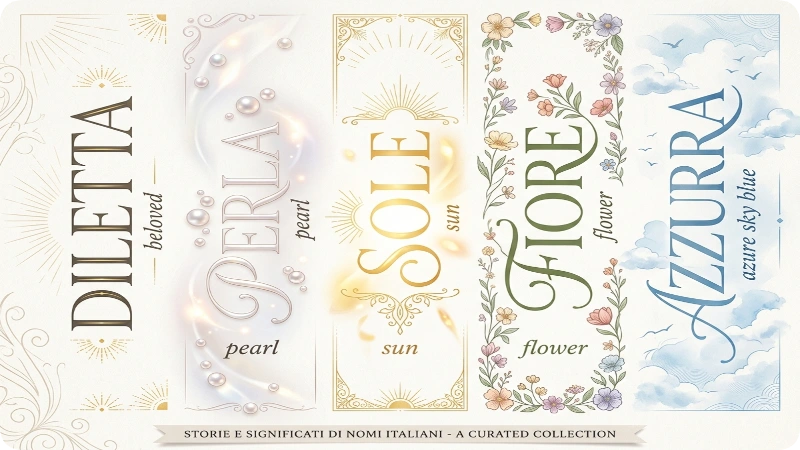
Diletta means “beloved” in Italian and derives from Latin dilectus. Its meaning gives the name a warm and affectionate quality.
Perla
Perla is the Italian and Spanish form of Pearl, making it a natural choice for someone who wants a name connected with something precious and luminous.
Sole
Sole means “sun” in Italian. Its short form gives it a particularly clean and modern appearance.
Old and Medieval Italian Names
If you want a genuinely historical feel, medieval Italian names can provide some of the most distinctive options.
| Name | Period/Origin | Meaning or Connection |
| Arlotto | Medieval Italian | Possibly “vagabond” |
| Bonaccorso | Medieval Italian | Good + help |
| Bonaparte | Medieval Italian | Good + part/share |
| Bonizzone | Medieval Italian | Derived from “good” |
| Nascimbene | Medieval Italian | Born well |
| Adone | Italian | Form of Adonis |
| Palmiro | Italian | Pilgrim |
| Novella | Italian | New, young, novel |
Arlotto is recorded as a medieval Italian name and may derive from Old French herlot, meaning “vagabond” or “tramp.”
Bonaccorso combines medieval Italian elements associated with “good” and “help.” Bonaparte similarly combines elements meaning “good” and “part” or “share.”
These historical names can feel particularly unusual today because they come from naming traditions that are much less familiar to modern international audiences.
Rare Italian Names Inspired by Nature
Italian vocabulary provides several beautiful names connected with flowers, colors, light, and the natural world.
| Name | Meaning | Nature Connection |
| Fiore | Flower | Floral |
| Fioralba | Flower + dawn | Floral |
| Ornella | Flowering ash tree | Tree |
| Primula | Primrose family | Floral |
| Rossa | Red | Color |
| Sole | Sun | Celestial |
| Alba | Dawn | Celestial |
| Azzurra | Azure, sky blue | Sky |
| Ambra | Amber | Natural material |
| Perla | Pearl | Gem |
Ornella
Ornella was created by Italian author Gabriele d’Annunzio for his 1904 play La Figlia di Jorio. He derived it from Tuscan Italian ornello, meaning “flowering ash tree.”
Azzurra
Azzurra means “azure, sky blue” in Italian. Its color association makes it an appealing choice for parents drawn to names with a visual quality.
Primula
Primula comes from the name of a flower genus that includes the primrose. It derives from Latin primulus, meaning “very first.” Behind the Name lists it as rare in Italian usage.
Rare Italian Religious Names

Italian naming traditions have strong connections with Christianity and Catholic culture, so many distinctive names come from religious titles, saints, and religious concepts.
| Name | Meaning/Connection | Style |
| Arcangelo | Archangel | Strong |
| Arcangela | Feminine form of Arcangelo | Traditional |
| Annunziata | Announced | Religious |
| Annunziato | Masculine form of Annunziata | Traditional |
| Assunta | Taken up/received | Religious |
| Consolata | Consoled | Marian |
| Osanna | Italian form of Hosanna | Biblical |
| Santo | Saint | Direct |
| Santina | Diminutive of Santo | Traditional |
| Santuzza | Diminutive of Santa | Rare |
Arcangelo
Arcangelo literally means “archangel” in Italian. Its feminine form is Arcangela.
Assunta
Assunta means “taken up, received, assumed” in Italian and refers to the Assumption of the Virgin Mary.
Consolata
Consolata means “consoled” in Italian and comes from the Marian title Maria Consolata.
Santuzza
Santuzza is a rare Italian diminutive of Santa. It has a distinctly traditional and regional character.
Rare Italian Names by Style
| Style | Girl Names | Boy Names |
| Romantic | Amaranta, Diletta, Amore | Amatore, Agapito |
| Nature inspired | Fioralba, Ornella, Sole | Palmiro |
| Strong | Selvaggia, Rossa | Ardito, Ansaldo |
| Vintage | Novella, Santuzza | Adone, Savio |
| Religious | Arcangela, Assunta | Arcangelo, Santo |
| Literary | Fiammetta, Novella | Galileo, Adone |
| Medieval | Bonaccorso, Bonizzone | Arlotto, Nascimbene |
| Minimalist | Sole, Fiore | Sante, Savio |
How to Choose a Rare Italian Name
1. Decide How Rare You Want the Name to Be
A name can feel rare without being completely unknown. For example, Gioia and Fiore are recognizable Italian words and names, while Bonizzone or Nascimbene will feel much more historical and unusual.
2. Consider the Meaning
Meaning can help narrow your choices.
For example:
- Love: Amore, Diletta
- Joy: Gioia
- Wisdom: Savio
- Boldness: Ardito
- Sun: Sole
- Flower: Fiore
- Wild: Selvaggia
- Flame: Fiamma
3. Think About Italian Pronunciation
Italian pronunciation can differ from English pronunciation. Before choosing a name, check how native Italian speakers pronounce it and consider whether the pronunciation will remain intuitive where you live.
4. Consider Historical Names Carefully
Medieval names can be wonderfully distinctive, but they may also feel strongly historical. Arlotto, Bonaccorso, Bonizzone, and Nascimbene have a very different character from modern Italian names.
5. Check Regional Associations
Some names have strong regional or religious associations. Addolorata, for example, is particularly associated with southern Italy, while names such as Loreto connect strongly with specific places and religious traditions.
10 FAQs About Rare Italian Names
What are some rare Italian girl names?
Some distinctive choices include Amaranta, Fioralba, Fiamma, Gioia, Ornella, Selvaggia, Sole, Santuzza, and Primula.
What are some rare Italian boy names?
Interesting choices include Adone, Ansaldo, Ardito, Amatore, Palmiro, Savio, Nascimbene, and Bonaccorso.
What Italian girl name means joy?
Gioia means “joy” in Italian.
What Italian name means flower?
Fiore means “flower” in Italian. It is documented as both masculine and feminine. Fiorella is a feminine form derived from fiore with a diminutive suffix.
What Italian name means sun?
Sole means “sun” in Italian.
What Italian name means beloved?
Diletta means “beloved” in Italian. Amatore comes from Latin Amator, meaning “lover,” while Agapito derives from Greek Agapetos, meaning “beloved.”
What Italian name means bold?
Ardito comes from medieval Italian ardito, meaning “bold.”
What Italian name means archangel?
Arcangelo literally means “archangel” in Italian. Arcangela is its feminine form.
What is a rare Italian unisex name?
Amore, Fiore, Evangelista, Loreto, and Rosario have documented masculine and feminine usage, although usage can vary by language and region.
Are rare Italian names always originally Italian?
No. Italian usage and Italian etymological origin are not always the same. For example, Adone is an Italian form of Adonis, while Ansaldo comes from a Germanic name. A name can therefore have established Italian usage while having roots in another language.
Key Takeaways
- Amaranta is a rare Italian form of Amarantha.
- Fioralba combines “flower” and “dawn.”
- Fiamma means “flame.”
- Gioia means “joy.”
- Selvaggia means “wild.”
- Ardito means “bold.”
- Savio means “wise.”
- Sole means “sun.”
- Fiore means “flower” and has masculine and feminine usage.
- Arcangelo means “archangel.”
- Primula is a rare Italian flower name.
- Ansaldo, Adone, Amatore, and Palmiro offer distinctive choices for boys.
- “Rare” should be understood in context because usage varies by region and generation.
Conclusion
Rare Italian names can give a child a distinctive identity while preserving a strong connection to Italian language and history. If you prefer romantic meanings, Amaranta, Diletta, Amore, and Fioralba offer affectionate choices. For nature lovers, Fiore, Sole, Ornella, Primula, and Azzurra provide vivid imagery. For boys, Ardito, Savio, Ansaldo, Adone, and Palmiro combine unusual sounds with established histories. Meanwhile, names such as Fiore, Amore, Loreto, and Rosario provide interesting options when you want cross gender usage. Whether you prefer a medieval name, a poetic nature name, a religious choice, or a simple Italian word name, the key is to balance rarity with pronunciation, cultural context, meaning, and how naturally the name fits your family.

Leave a Reply